
Frequently asked questions

Straight answers for ranch-ready installs.

Sizing, HS-20 engineering, concrete requirements, curing, lifting, drainage, product specs, pallet dimensions, and layout guidance for Cattle Guard Forms.

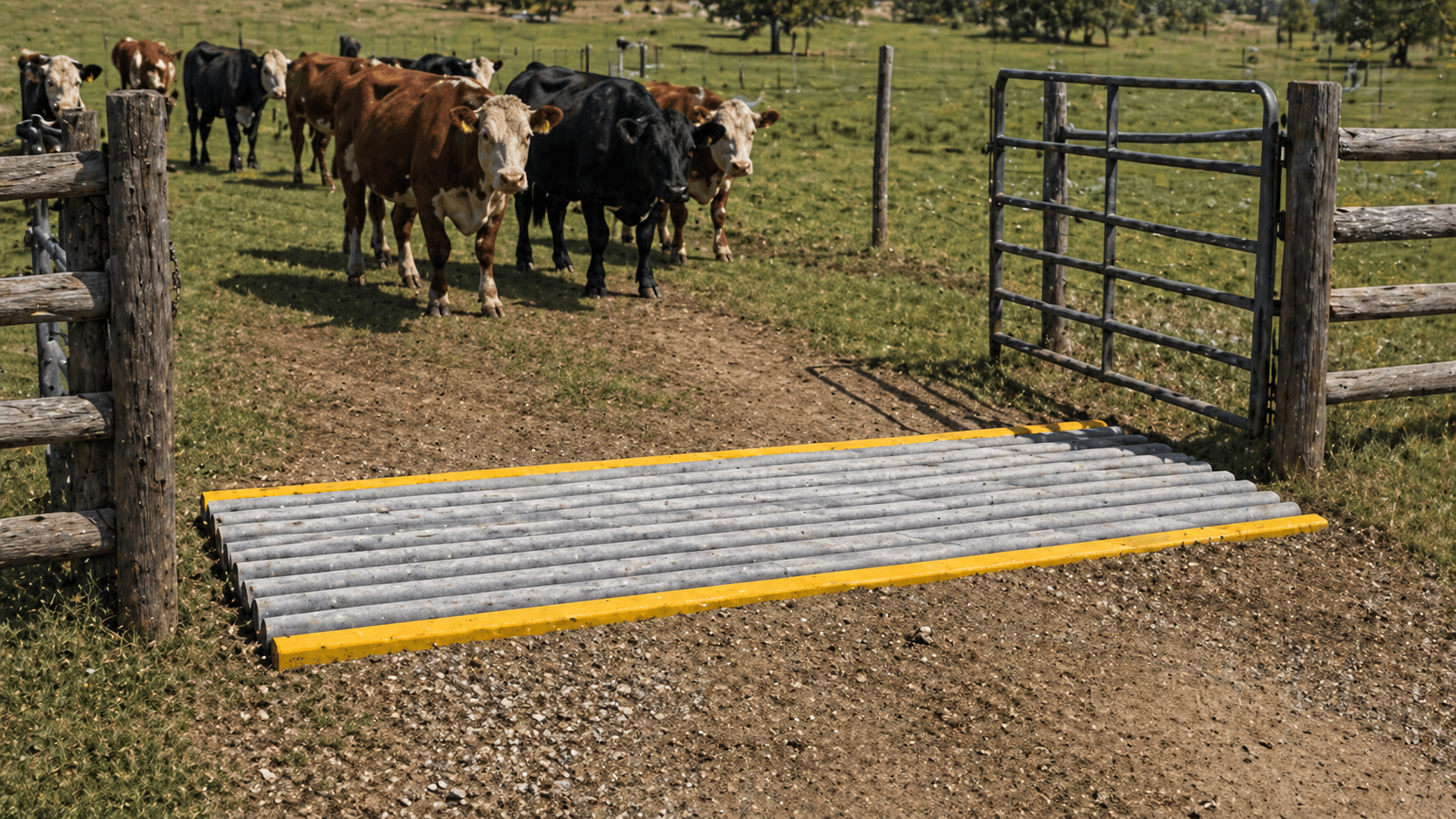
Cattle guard installed at a ranch entrance

HS-20 Rated

Engineering certification available

Form size

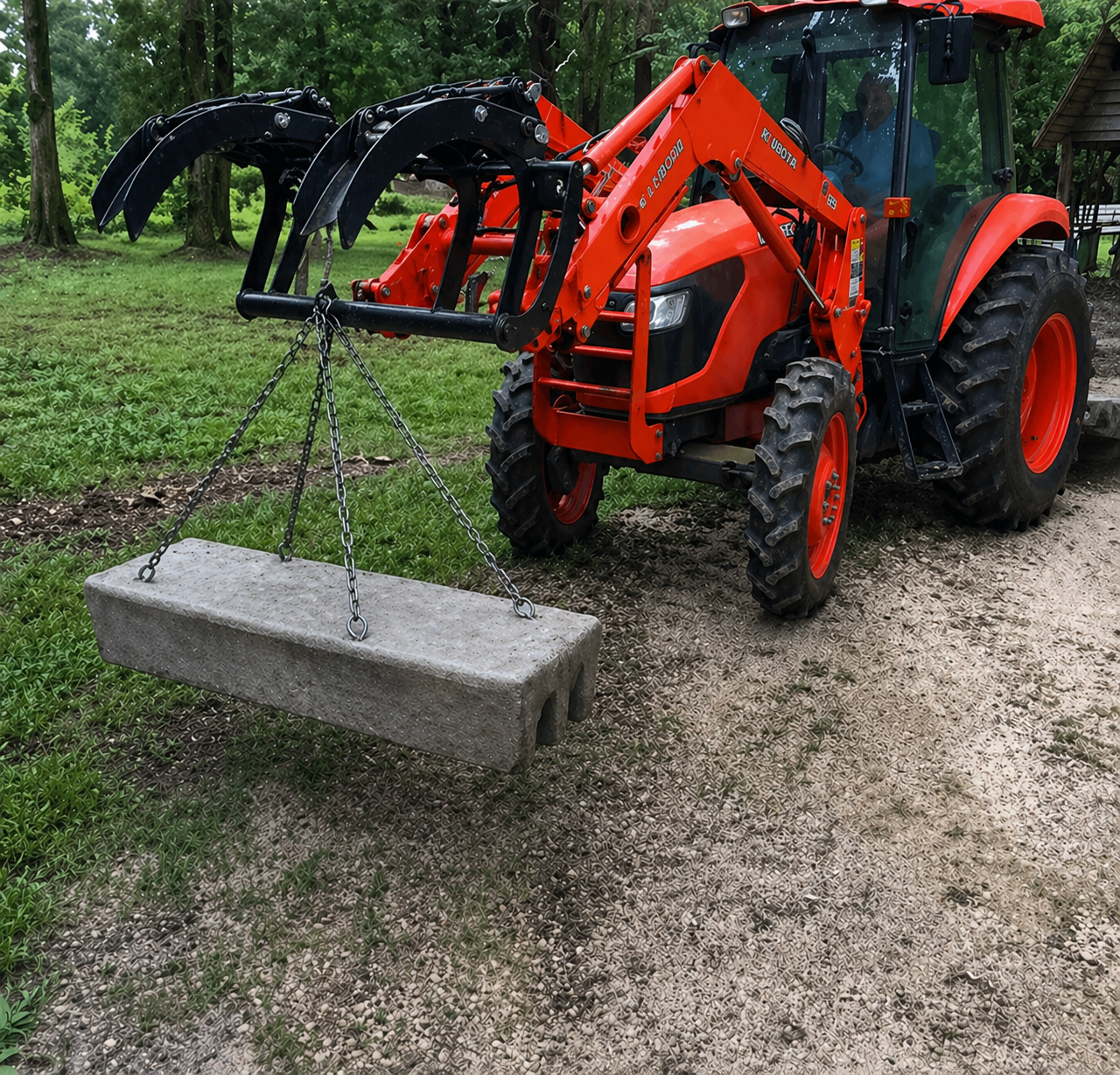
6 ft long x 21.5 in wide x 16 in high

Groove depth

9 in deep grooves

Form weight

80 lb reusable mold

Recommended concrete

4000 PSI concrete mix

Typical form removal

48–72 hours depending on conditions

Heavy vehicle cure target

28 days

Pallet max

Only 6 CowStops fit on one pallet

Specs

CowStop reusable mold dimensions.

Length

6 ft

Width

21.5 in

Height

16 in

Weight

80 lb

Grooves are 9 inches deep. These are the base product specs to use for pallet dimensions, pallet weight planning, freight quoting, and shipping setup.

Pallet dimensions and weights

1–6 CowStops per pallet.

Only six CowStops fit on one pallet. Use this table for distributor quoting, freight setup, and Echo shipping calculations.

QuantityPallet dimensionsPallet weightPallet count
1 CowStop72 x 48 x 20 in105 lb1 pallet
2 CowStops72 x 48 x 20 in190 lb1 pallet
3 CowStops72 x 48 x 36 in270 lb1 pallet
4 CowStops72 x 48 x 36 in355 lb1 pallet
5 CowStops72 x 48 x 52 in440 lb1 pallet
6 CowStops72 x 48 x 52 in525 lb1 pallet max
Distributor note: 6 CowStops is the maximum per pallet. Orders over 6 require an additional pallet and should repeat the same 1–6 pallet planning table for the remaining quantity.
HS-20

Engineering certificate

HS-20 Engineering Data Available

The uploaded engineering package includes stamped drawings and a certification page referencing HS-20 loading. Use this as the credibility section for customers who ask about rating and load documentation.
Opening guide

Sizing and layout planning.

For design visuals, a 16 ft driveway should be shown with two tight 8 ft sections across the opening, not one undersized form.

Finished cattle guard section layout

Sizing table

Opening size and pour planning.

OpeningRecommendationLayoutNotes
12 ft opening6 pours2 wide x 3 deepStandard recommended layout for a 12 ft opening.
16 ft opening2 eight-foot sectionsTwo tight sections acrossA 16 ft driveway should read as two 8 ft sections with a small center seam.
18 ft opening9 pours3 wide x 3 deepPaint yellow drive lines for heavy trucks and equipment.
24 ft opening3 eight-foot sections3 sections acrossRequires about 4 cubic yards of concrete total.

FAQ

Common questions.

What are the CowStop reusable mold specs?+

The CowStop reusable mold is 6 feet long, 21.5 inches wide, and 16 inches high. The grooves are 9 inches deep, and the reusable form weighs approximately 80 pounds. These specs should be used as the base product dimensions and weight for pallet/shipping setup.

How many CowStops fit on one pallet?+

A maximum of 6 CowStops fit on one pallet. For 1–6 CowStops, use the pallet dimension and weight table on this page. For 7 or more CowStops, start a second pallet and repeat the same planning logic.

What does HS-20 rated mean?+

The engineering certificate package references HS-20 loading and includes stamped engineering drawings and certification pages. Use the certificate package when customers need engineering documentation.

How should a 16 ft driveway look?+

A 16 ft driveway should be represented by two 8 ft cattle guard sections side by side, tight together, with only a narrow center seam. It should not look like one short form only spans half the driveway.

How many pours are suggested for 12 ft and 18 ft openings?+

For a 12 ft opening, use 6 pours arranged 2 wide x 3 deep. For an 18 ft opening, use 9 pours arranged 3 wide x 3 deep.

What concrete strength is recommended?+

Use 4000 PSI concrete for the standard HS-20-rated configuration shown in the engineering material.

How long before heavy equipment can drive over a new pour?+

Use 28 days as the heavy vehicle cure target before running heavy semi trailers or farm equipment over new pours.

What release agent should be used?+

Use a non-petroleum release agent such as vegetable oil, Pam, car wax, grease, or another concrete release agent.

Can a concrete truck pour the form?+

Yes. Pour slowly and make sure to settle the concrete around rebar, hardware, and corners so air pockets are reduced.

Do you recommend a compacted base?+

Yes. Compact or tamp the installation area and use a gravel layer where needed for stability and drainage.

Can the forms be reused?+

Yes. The form system is designed for repeat pours, which is the main cost-saving advantage over buying and shipping one finished steel cattle guard at a time.

What should customers do if they need layout help?+

Send them to support or the quote form so the team can help with driveway width, opening size, number of pours, and install plan.

Still have questions?

Contact us for help choosing the right layout, number of pours, installation approach, distributor orders, or pallet freight planning.